

STOCOPTICON
By Cesar Garcia

Every trip can become a data point. Every data point can become part of a system that watches, categorizes, and acts on people—often without their knowledge or consent.
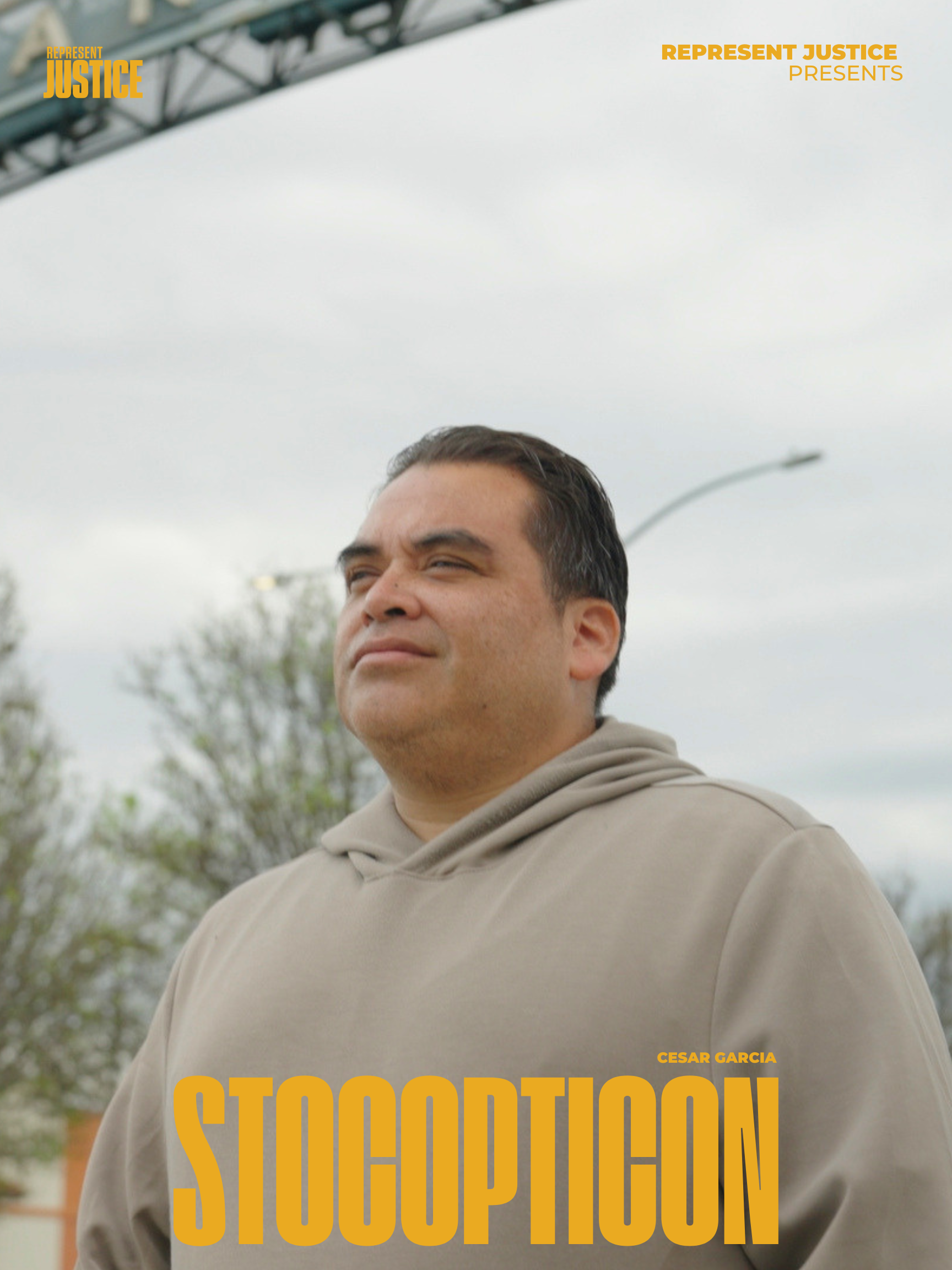
STOCOPTICON follows Cesar Garcia and other justice-impacted people as they confront the growing connection between surveillance, incarceration, and the data systems embedded in everyday life. The film asks what happens when institutions know more and more about our movements while communities have less and less power over how that information is used.
About the Issue

Communities are being tracked at a scale most people do not realize—and the consequences fall hardest on people already targeted by policing and incarceration. In San Pablo, California, for example, the promise of becoming a “Smart City” has accompanied a major expansion of police infrastructure, surveillance technology, and regional law-enforcement training—what local opponents call California’s Cop City.
San Pablo approved a $44 million police headquarters and regional training center in a city of roughly 30,000 residents. City of San Pablo Project Fact Sheet
The 42,000-square-foot complex includes a 20-lane indoor gun range, training classrooms, virtual-reality simulator, police-dog kennels, and drone work area. Mack5 Project Overview and Overaa Project Overview
The San Pablo Police Department reports maintaining more than 250 “situational awareness” cameras, with plans to expand their data-mining capabilities. City of San Pablo Police Department Budget
Cesar’s research documents how San Pablo’s surveillance network grew alongside license-plate-reading technology, police drones, GPS tracking tools, and other systems capable of monitoring residents across time and place. Cesar Garcia, “Smart City? Cop City!”; The Discovery Project (poster); A New SCENE of the Crime: Practicing Abolition Beyond Legal Frameworks (forthcoming publication by Cesar)
STOCOPTICON asks what happens when cities invest millions in systems designed to watch, track, and police residents without giving those residents meaningful power over the decisions. A truly smart city should invest in the safety, health, and dignity of its people—not simply expand its capacity to monitor them.
Take Action
Know What Is Watching Your Community
-

Find Out How Your Data Is Being Used
Search for surveillance technologies used by law enforcement in your area. Look for automated license plate readers, facial recognition, camera networks, drones, predictive policing tools, and data-sharing agreements.
-
Participate Before the Decision Is Final
Support the work of the Electronic Frontier Foundation (EFF), and attend city council, county board, police commission, campus, or other public meetings where surveillance technology is purchased, renewed, or expanded. Request contracts and policies. Ask for public notice, independent oversight, strict limits on sharing and retention, and a meaningful opportunity for community input.
-

Hire Cesar and Support His Community Led Work
Support the work of Cesar, a local organizer working on privacy, immigrant justice, racial justice, police accountability, and the rights of formerly incarcerated people. The people most exposed to surveillance should help define the problem and lead the response. Hire Cesar to speak at your next conference, panel, or event.
Host A Screening
Bring STOCOPTICON to your campus, organization, coalition, conference, or community event to spark conversation about surveillance, technology, incarceration, and accountability.
Interested in hosting a screening, panel, or community conversation featuring Cesar Garcia or local advocates?